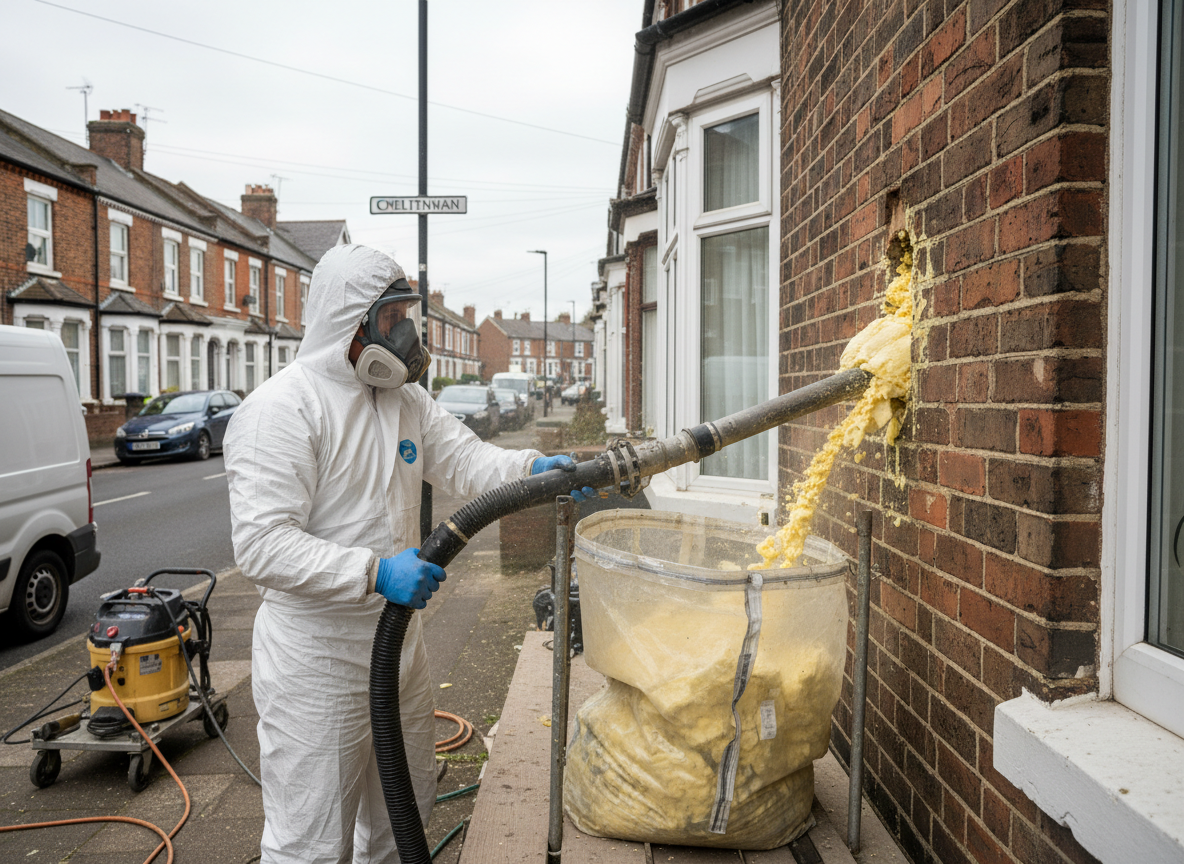
Cheltenham's Victorian and Georgian terraces, especially around Montpellier and the town centre, often feature narrow cavities that were later filled with spray foam. Once winter temperatures drop and rainfall increases, the foam can trap moisture against the inner brickwork, leading to damp patches and reduced insulation performance. Removal requires careful cutting and extraction to avoid damaging the original masonry that is common in these properties.
The process starts with identifying whether the foam has bonded to timber lintels or has migrated into weep holes, both frequent issues in Cheltenham's older housing stock. Technicians work from the exterior where possible to limit internal disruption, using containment measures to catch debris before it reaches garden soil or nearby paving. Local soil conditions, often clay-based and slow-draining, make prompt debris removal essential to prevent secondary water issues.
Edge cases include homes with later extensions or rendered walls where access points are limited. In these situations, internal inspection via small boreholes helps map the full extent of the foam before extraction begins. Waste is bagged on site and taken away for proper disposal, leaving the cavity ready for inspection by the homeowner or their builder.
Technician insight
In Cheltenham, the thing that catches most people out with Cavity wall spray foam removal is how the clay-heavy soil around Montpellier terraces holds water against the base of the walls, so any missed foam fragments at the bottom of the cavity quickly cause fresh damp once the winter rains arrive.
Montpellier Terrace Terrace House
Homeowner noticed persistent damp on the gable wall after heavy autumn rain. Inspection found spray foam still present in the lower third of the cavity, blocking weep holes. We removed the remaining foam through external cuts, cleared the base and left the cavity ventilated. Damp signs reduced within weeks.
How it works
- 1
Site Survey
Assess cavity condition, wall construction and access points from Glendale House base in Montpellier Terrace.
- 2
Containment Setup
Protect internal rooms and external ground with sheeting before any cutting begins.
- 3
Foam Extraction
Cut and remove foam in sections, checking for hidden pockets around windows and vents typical in Cheltenham terraces.
- 4
Cavity Clearing and Handover
Vacuum residue, clear weep holes and leave the property ready for follow-up works.
Pricing
Cost varies with wall length, number of access points and whether internal or external work is required on Cheltenham properties.