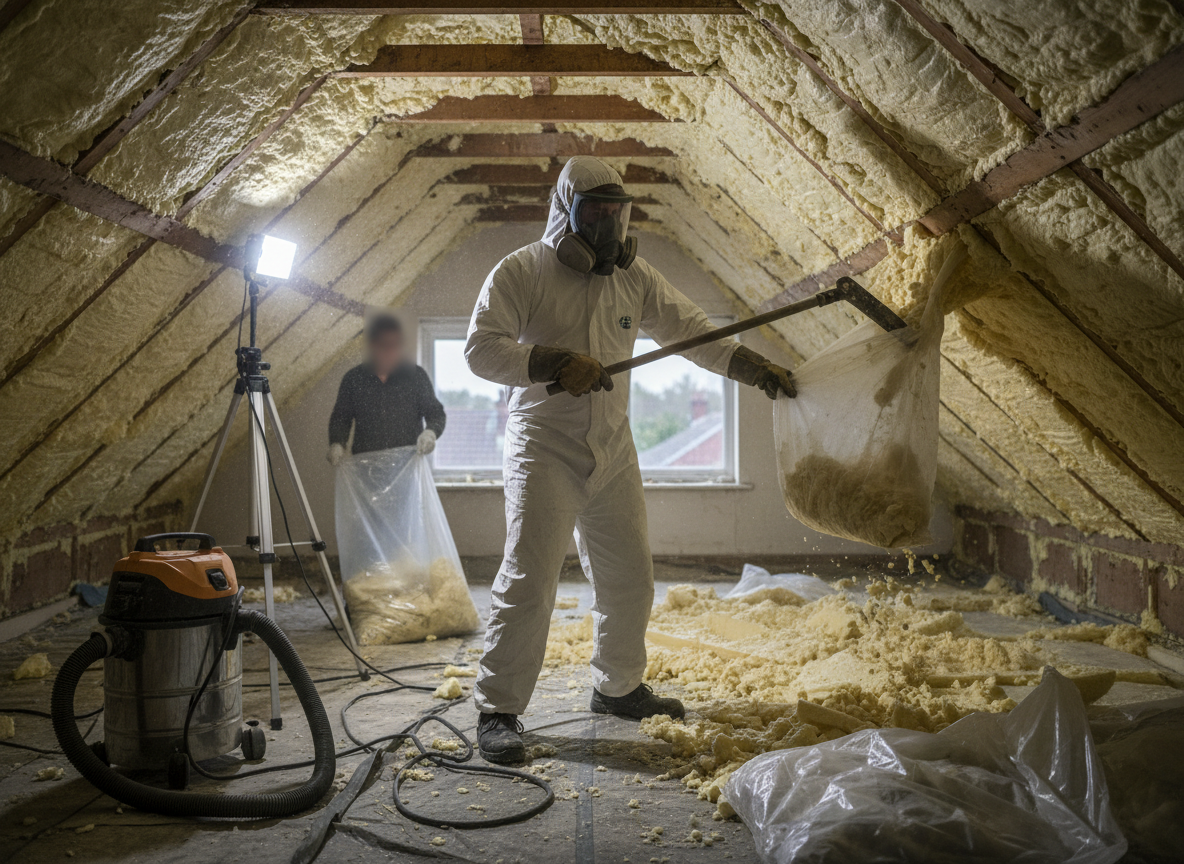
Cheltenham’s Regency and Victorian terraces around Montpellier, Pittville and Lansdown often received spray foam in the 1990s and early 2000s to improve loft insulation. Over time the closed-cell material can trap moisture against rafters and cause timber decay, especially during the county’s frequent winter rain. Removal requires careful cutting and vacuum extraction so that original lath-and-plaster ceilings and timber roof structures remain intact. Homeowners in these conservation areas also need to ensure any new insulation meets current building regulations once the foam is gone.
The process starts with a full inspection of the roof void or cavity walls. Technicians identify whether the foam was applied directly to tiles, felt or masonry, because each substrate demands different cutting tools and containment methods. In Cheltenham’s stone-built properties, dust and debris must be fully contained to protect period features. After extraction, surfaces are cleaned and left ready for inspection by a building surveyor or for installation of alternative insulation such as mineral wool or rigid boards.
Edge cases include foam that has expanded behind electrical cables or pipework in mid-terrace homes near the town centre. These runs must be isolated before cutting begins to avoid damage that could affect neighbouring properties. Wet foam that has absorbed rainwater also weighs more and breaks into larger chunks, requiring extra time for safe removal and disposal at licensed Gloucestershire waste facilities.
Technician insight
In Cheltenham the thing that catches most people out with spray foam removal near me is the tight bond the old foam has to the original lath and plaster in Regency terraces around Montpellier Terrace and Pittville; one wrong cut and the ceiling can drop before you even reach the rafters.
Loft clearance in a Montpellier terrace
Homeowner noticed damp staining on bedroom ceilings in a mid-terrace house off Montpellier Terrace. Inspection found closed-cell foam applied directly to the felt and rafters that had started to hold rainwater. We isolated cables, cut the foam in sections and extracted it over two days, leaving the original timber dry and ready for new insulation.
How it works
- 1
Site Inspection
Survey the loft or wall cavities in the Cheltenham property to assess foam type, depth and any hidden services.
- 2
Containment Setup
Protect floors, electrics and neighbouring rooms before cutting and extraction begins.
- 3
Foam Extraction
Cut and vacuum the material in sections, bagging it for licensed disposal.
- 4
Surface Cleaning
Remove residue and inspect timber or masonry for any required repairs.
- 5
Final Walkthrough
Confirm the space is clear and ready for new insulation or surveyor sign-off.
Pricing
Upfront quotes provided after on-site inspection; final cost depends on access, foam depth and disposal volume.