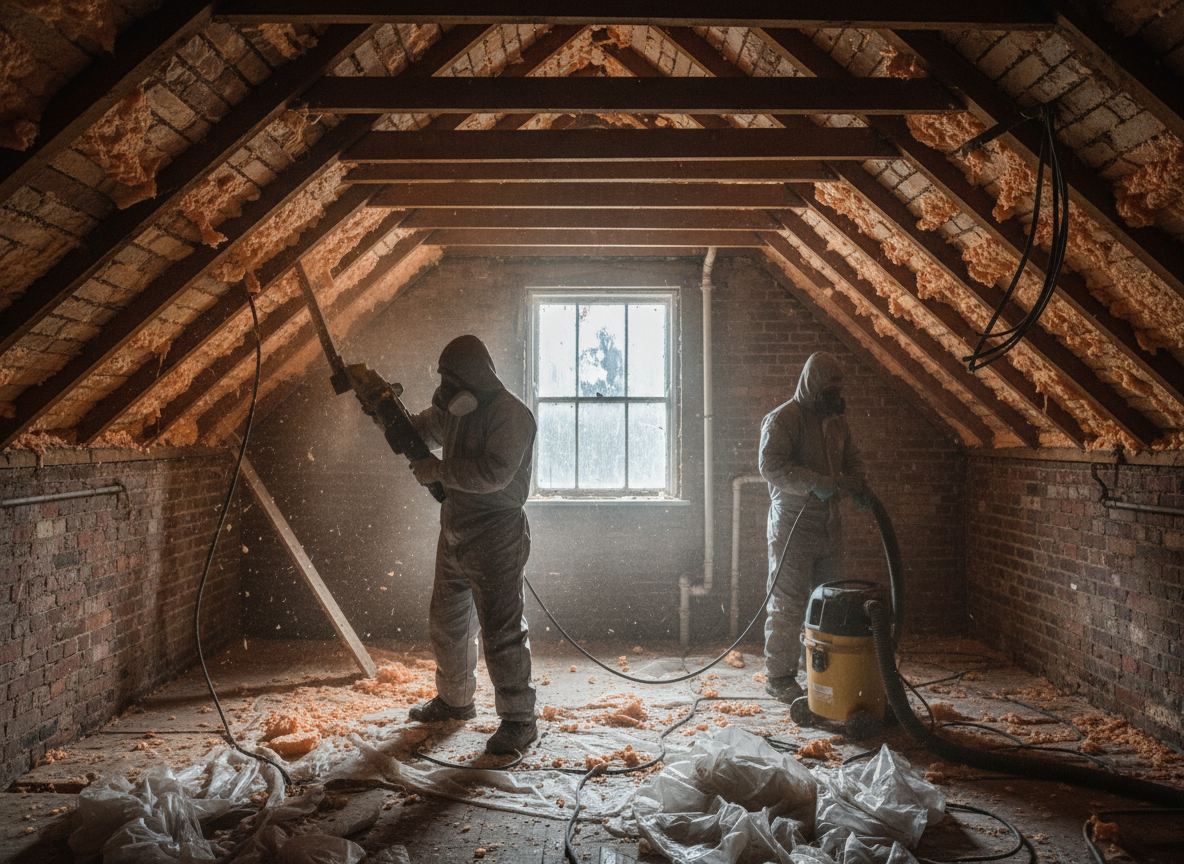
Closed cell spray foam bonds tightly to timber, brick and plaster in Cheltenham's Victorian and Georgian terraces. Removal requires mechanical cutting followed by careful scraping to avoid pulling original lath or damaging masonry that has settled over decades. Damp winters in the Cheltenham area often leave residual moisture behind the foam, so crews must check for hidden rot before any new insulation goes in. Access through narrow loft hatches common in Montpellier and Pittville properties adds time and requires smaller tools.
Homeowners sometimes discover closed cell foam was applied over existing mineral wool or between rafters without ventilation gaps. Once removed, the original roof structure must be assessed for adequate airflow to prevent condensation on the underside of tiles, especially on north-facing slopes around the Cheltenham Racecourse area. Dust and small foam particles travel easily through floor voids in these older buildings, so full containment and HEPA vacuuming after each shift is standard practice.
Local planning rules in conservation zones around central Cheltenham can affect how much material is stripped back when foam has been applied to visible elevations. Technicians also watch for lead paint layers on timber that may be disturbed during scraping. After extraction, surfaces are left ready for inspection so owners can decide on breathable alternatives suited to the region's rainfall patterns.
Technician insight
In Cheltenham, the thing that catches most people out with closed cell spray foam removal is how Georgian and Victorian brickwork in areas like Montpellier holds onto winter rain once the foam is stripped, often revealing hidden damp that needs addressing before any new insulation.
Loft clearance in a Pittville terrace
Homeowner reported musty smells in the top floor. Inspection showed closed cell foam applied directly to rafters with no ventilation. We removed the foam in sections, checked the original timbers for rot, and restored airflow. The property now meets breathability needs typical of Cheltenham's older stock.
How it works
- 1
Site Assessment
Inspect foam depth, substrate condition and access points in the Cheltenham property.
- 2
Containment Setup
Seal work areas to prevent foam dust migrating through floor voids common in local terraces.
- 3
Mechanical Removal
Cut and scrape closed cell material without damaging original timbers or masonry.
- 4
Cleanup And Inspection
HEPA vacuum all surfaces then check for hidden moisture or rot before handover.
Pricing
Pricing varies with property age, foam depth and access difficulty in Cheltenham homes; contact us for an assessment.