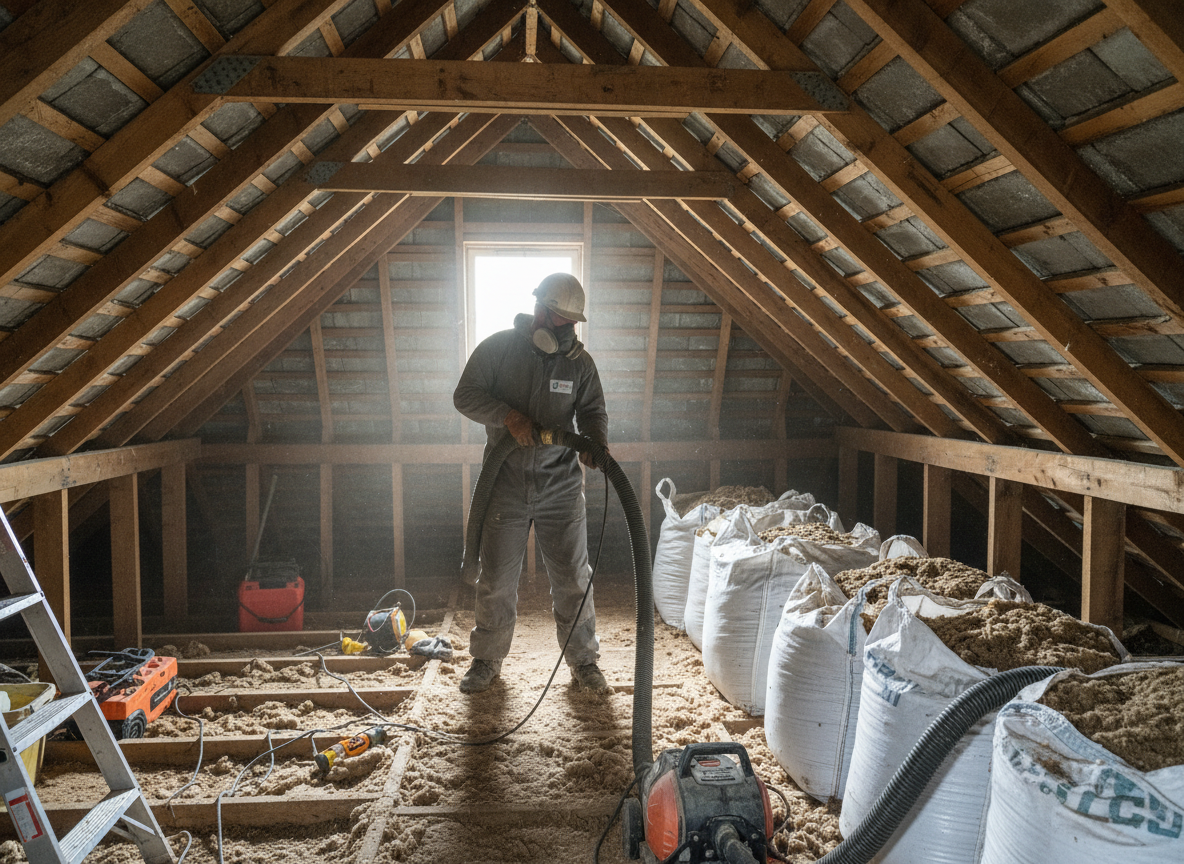
Cheltenham's Victorian and Edwardian terraces in neighborhoods like Montpellier and Pittville often have spray foam applied directly to lath and plaster or between rafters in lofts. Over time this traps moisture against original timbers, especially during the county's frequent winter rainfall when roofs stay damp for weeks. Removal requires careful cutting and vacuum extraction to avoid disturbing fragile ceilings or spreading foam dust through the property's narrow hallways and shared walls.
Edge cases appear regularly in the Cheltenham area where foam was injected into cavity walls of 1930s semis around Charlton Kings. The material can bond to brickwork and electrical cables, requiring sectional dismantling rather than simple scraping. Local building practices mean many properties still have single-stack chimneys and vented eaves that complicate full containment, so negative-pressure setups are essential to stop particles migrating into living spaces during extraction.
Regulation compliance in Gloucestershire means waste foam must be segregated as non-hazardous or hazardous depending on age and any added fire retardants before transport to permitted disposal sites. Homeowners in the GL50 postcode often discover the foam was applied without proper ventilation gaps, so post-removal checks include verifying that roof timbers can dry naturally once the insulation is gone. Working from the given base at Glendale House allows 24/7 response when sudden leaks appear after heavy rain.
Technician insight
In Cheltenham the thing that catches most people out with insulation removal service is the way spray foam bonds to the original lath and plaster in Montpellier terraces during the county's long damp winters, so any aggressive pulling tears ceilings that then need full replacement.
Pittville Terrace Loft
Homeowner noticed persistent damp patches after recent heavy rain. Inspection revealed spray foam trapping moisture against rafters in a 19th-century terrace. Controlled sectional removal and vacuum extraction cleared the foam without disturbing the ceiling. Outcome allowed the timbers to dry and restored proper eaves ventilation.
How it works
- 1
Initial Inspection
Assess foam depth, substrate condition and access points in the Cheltenham property.
- 2
Containment Setup
Install negative pressure and dust barriers suited to older terrace layouts.
- 3
Controlled Removal
Cut and extract foam in sections while protecting lath, plaster and wiring.
- 4
Site Clearance And Disposal
Vacuum residues, remove waste to licensed sites and confirm ventilation paths are clear.
Pricing
Upfront quotes provided after on-site inspection, with final cost driven by property age, foam depth and access constraints.