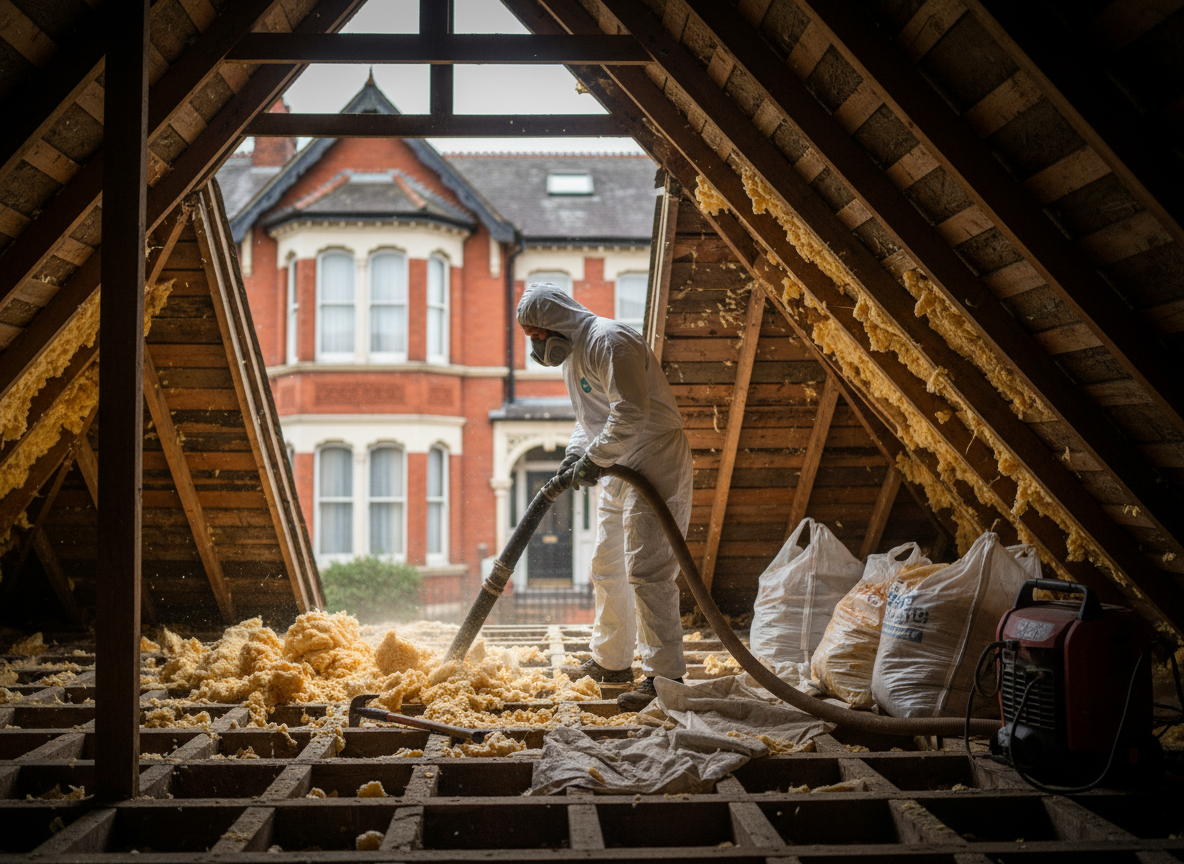
Mortgage lenders frequently reject applications on Cheltenham homes where closed-cell spray foam has been applied directly to roof tiles or rafters. Removal requires careful separation of the foam from historic lath and plaster or timber structures common in Montpellier terraces and Pittville villas. We use low-dust mechanical scraping followed by solvent treatment to avoid damaging original roof timbers that have already been exposed to decades of Gloucestershire damp winters.
Edge cases we encounter include foam that has migrated into eaves and behind fascia boards on Victorian semis along the Bath Road corridor. These hidden pockets must be fully extracted before a surveyor will sign off. We also address the residue left on felt underlays, which can trap moisture and lead to rot if not neutralised. All waste is bagged on site and removed the same day to keep disruption minimal for homeowners awaiting mortgage offers.
Lender Documentation Requirements
We supply photographic evidence of complete foam extraction and a written confirmation that the roof void now meets current building regulations. This documentation is formatted for direct submission to high-street lenders operating in the Cheltenham area.
Seasonal Timing Considerations
Winter jobs in Cheltenham often involve working around frozen roof tiles and higher moisture levels. We schedule extra ventilation measures during these months to prevent condensation forming on exposed timbers before the new insulation is fitted.
Technician insight
In Cheltenham, the thing that catches most people out with mortgage lender spray foam removal is foam that has wicked behind the fascia boards on 19th-century terraces in Montpellier. Once winter temperatures drop and the roof contracts, those thin layers crack the original timber if you try to pull them too aggressively.
Montpellier Terrace Loft Clearance
A homeowner in a Grade II listed terrace near Montpellier Terrace needed foam removed before their lender would release funds. We found closed-cell foam had crept into the eaves and bonded to original rafters. Careful scraping and solvent treatment cleared every trace without damaging the historic timber. The surveyor signed off the following week.
How it works
- 1
Initial Loft Inspection
We assess foam type, depth, and any hidden migration into eaves or party walls typical of Cheltenham terraces.
- 2
Safe Mechanical Removal
Closed-cell foam is separated from tiles and rafters using handheld tools to protect original timber in older Gloucestershire stock.
- 3
Residue Treatment and Cleaning
Solvent application neutralises remaining adhesive before all debris is vacuumed and bagged for off-site disposal.
- 4
Final Verification and Report
Post-removal photographs and a clearance statement are prepared for the mortgage lender's surveyor.
Pricing
Cost depends on property age, foam coverage, and access constraints in Cheltenham homes; we provide a site visit before quoting.