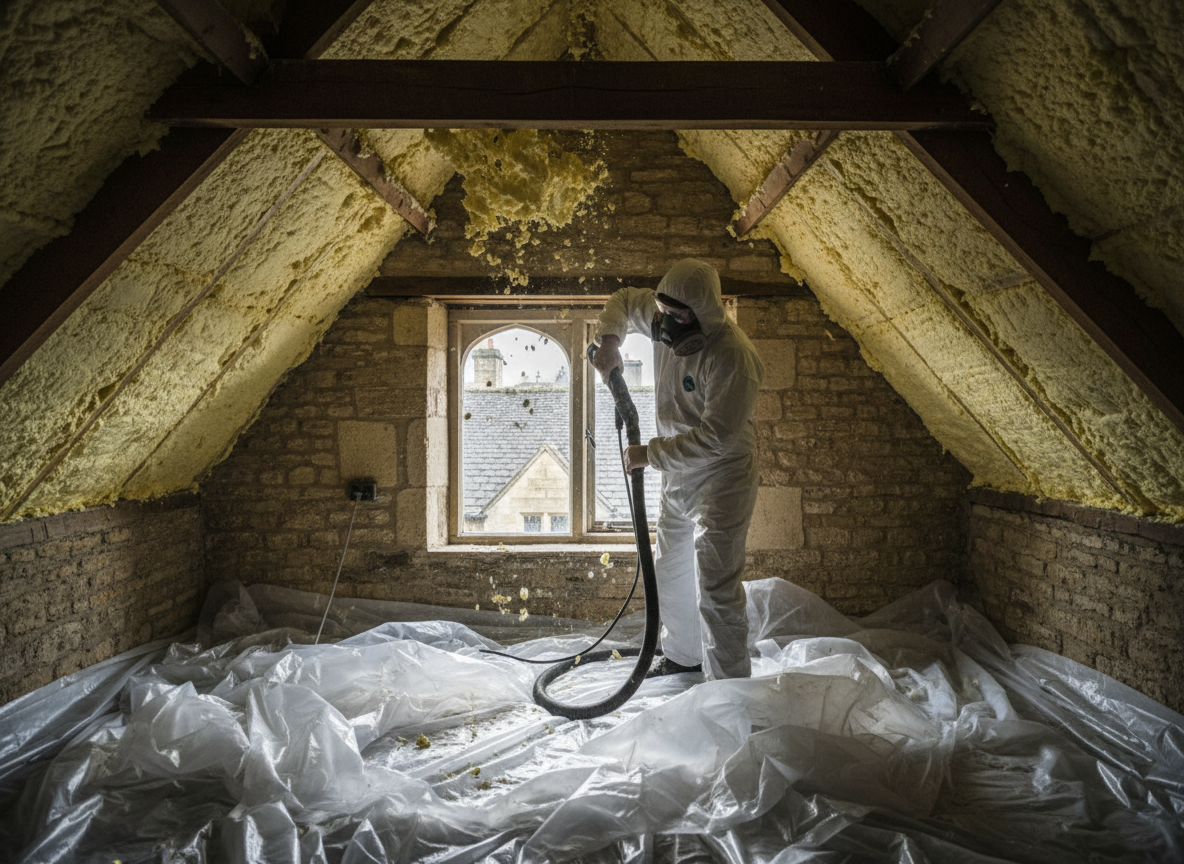
Thermal spray foam often bonds aggressively to timber joists, felt underlays and original lath and plaster in Cheltenham's Victorian and Georgian terraces. Removal crews must work from above and below simultaneously to prevent ceiling collapse, particularly in Montpellier and Pittville homes where access is restricted by narrow stairwells and fragile cornices. Moisture trapped beneath the foam can migrate into rafters once the seal is broken, so extraction is always followed by immediate ventilation checks.
Edge cases appear regularly in Cheltenham where foam was applied over existing insulation or around chimney stacks. These installations require staged removal to avoid dislodging soot or disturbing asbestos-containing flue wraps common in pre-1960s stock. Local planning rules for listed buildings around the town centre also mean any visible disturbance must be made good to match original finishes before handover.
Disposal routes matter because cured polyurethane is classified as non-hazardous yet bulky. Crews bag and remove material the same day to prevent wind-blown debris across Cheltenham gardens, then verify that roof ventilation is restored to Building Regulation standards before leaving site.
Technician insight
In Cheltenham, the thing that catches most people out with thermal spray foam removal is how tightly the foam bonds to the original lath and plaster ceilings in the terraces around Montpellier and Lansdown; one wrong pull and you drop a whole section of historic plaster that is expensive and slow to repair.
Attic Foam Extraction in a Pittville Terrace
Homeowner reported musty smells and stained ceilings after recent heavy rain. Inspection showed closed-cell foam applied directly to rafters and trapping moisture against the felt. We removed the foam in sections from above, dried the timbers, and reinstated ridge ventilation. The property dried out within a week with no further staining.
How it works
- 1
Initial Inspection
Access the roof void or wall cavity through existing hatches or small test openings to map foam depth and substrate condition.
- 2
Containment Setup
Install dust sheeting and negative air machines to protect living spaces below, especially important in terraced Cheltenham homes.
- 3
Mechanical Removal
Cut and peel foam in sections using oscillating tools and manual scraping while monitoring for plaster or timber damage.
- 4
Substrate Drying and Ventilation
Clear residual adhesive, allow timbers to dry, then reinstate or improve airflow paths to prevent future condensation.
- 5
Site Clearance
Bag all waste, vacuum surfaces and confirm the property is left clean and ventilated before departure.
Pricing
Upfront quotes issued after on-site inspection; price varies with access difficulty, foam thickness and whether work occurs in occupied or empty Cheltenham properties.