2026-10-23 ·
How to Prepare Your Loft for Spray Foam Removal in Gloucestershire
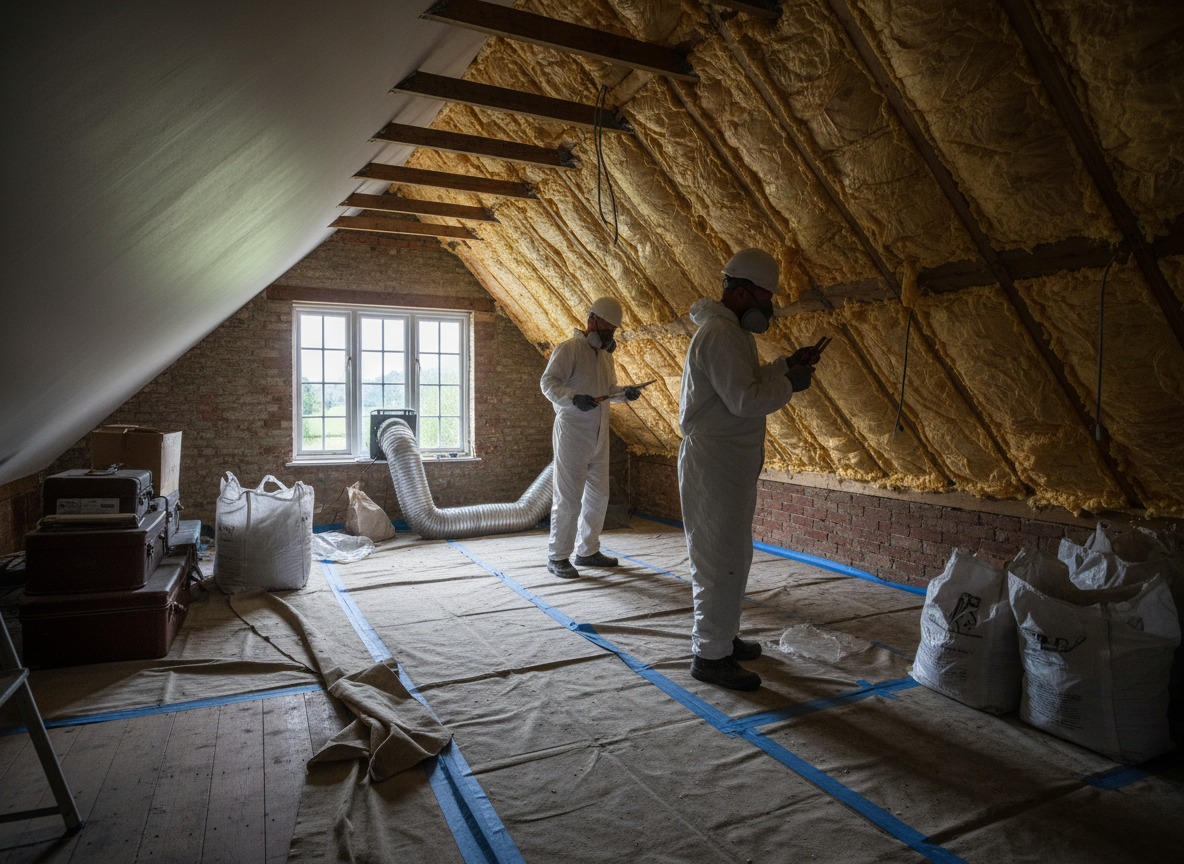
Start by clearing a 1.2-metre-wide path from the loft hatch to the farthest point where spray foam sits. This single step usually takes most homeowners 4–6 hours and prevents delays once the removal team reaches your Cheltenham address.
Assess Insulation Condition and Type
Walk the loft with a torch and note whether the foam appears open-cell or closed-cell. Open-cell material crumbles easily and releases more dust, while closed-cell stays rigid and needs different containment. In Cheltenham’s Victorian terraces and 1930s semis around Montpellier and Lansdown, closed-cell is common on pitched roofs because it was added later for extra rigidity. Check for water staining along the rafters; Gloucestershire’s frequent autumn rain often finds its way under slipped tiles and saturates foam edges. Photograph any damp patches and share them with the crew so they can plan extraction order. If you suspect older foam installed before 2010, note the colour and texture so the team can decide whether insulation assessment is required first. This early inspection prevents surprises once work begins and keeps the job moving smoothly through narrow lofts typical of the area.
Clear and Protect Stored Items
Remove all boxes, suitcases and Christmas decorations at least two days before the scheduled date. Anything left behind will collect fine particles during removal. Cover remaining fixed items such as water tanks and electrical cables with heavy-duty polythene sheeting taped at the seams. In properties near the Cheltenham Racecourse, where lofts often double as storage for event equipment, this protection step saves hours of later cleaning. Place old towels or dust sheets on the landing below the hatch; foot traffic in and out of the loft increases during the job and fine dust travels easily down stairs. If your loft has a boarded walkway, lift the boards nearest the hatch so the team can reach the foam without stepping on fragile ceiling plaster below.
Time the Work Around Local Weather
Schedule the preparation during a dry spell. Cheltenham’s wet winters mean high moisture levels that can turn removed foam into a heavier, messier material. Check the forecast for the week and aim to finish clearing the loft at least 48 hours before any predicted rain so the team can work without tarpaulins over the roof. The article Timing Spray Foam Removal Around Cheltenham's Wet Winters explains how wind-driven rain on the Cotswold escarpment affects extraction speed. Once the loft is empty and protected, leave the hatch open for 24 hours if possible; this allows any residual damp air to escape before the crew starts cutting and vacuuming.
Final Walk-Through and Access Confirmation
On the morning of removal, confirm the hatch opening measures at least 0.6 m by 0.5 m and that the ladder or steps are stable. Move any vehicles from the driveway so the van can park close; many Cheltenham streets around the town centre have limited on-street space. Place a bin liner by the hatch for small debris the team will bring down during the day. A quick final check ensures the path remains clear and all valuables are out of the way, letting the removal proceed without interruption in your Gloucestershire home.